
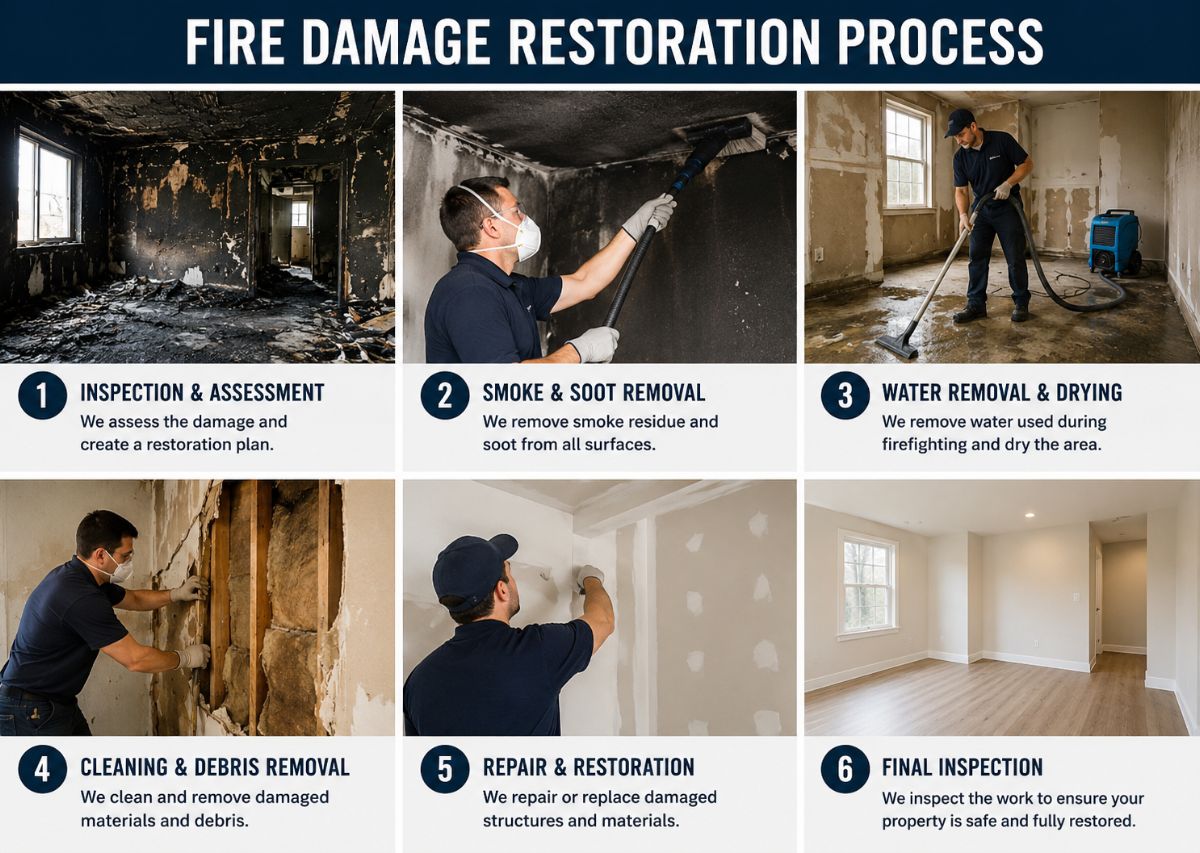
Experiencing a residential or commercial fire is one of the most devastating events a property owner can face. Once the flames are extinguished, the challenging journey of rebuilding your life and property begins with the specialized fire damage restoration process. This sequence of emergency response, structural assessment, and deep mitigation requires immediate implementation to prevent secondary ruin from smoke residues and water pooling. Understanding how professionals systematically clean, deodorize, and reconstruct your home provides clarity and reassurance during an incredibly chaotic and stressful period.
Restore your peace of mind and protect your property by calling 224-251-8444 to deploy our rapid emergency fire recovery technicians now.
The immediate aftermath of a fire leaves behind a complex environment filled with hidden hazards. Soot particles can corrode metal fixtures within hours, while standing water from fire hoses weakens structural framing and creates an ideal breeding ground for microbial growth. Navigating this situation successfully depends on an accurate assessment of the building components and the rapid implementation of tailored drying and cleaning protocols designed by remediation experts.
Emergency Contact and Immediate Assessment
The initial phase of the fire damage restoration process begins the moment a property owner contacts a professional mitigation company. Because soot and smoky odors begin altering porous materials immediately, a rapid dispatch team is sent to the location. These technicians evaluate the depth of the fire penetration and the boundaries of the smoke spread.
During this visual and technological inspection, professionals determine the structural safety of the building before anyone is permitted to enter. They categorize the types of soot present, which can range from dry, powdery ash to sticky, oily protein residues. This distinction is critical for selecting the appropriate cleaning solvents and equipment later on.
Structural Board Up and Tarping Services
Fires often compromise the exterior envelope of a building, leaving windows shattered, doors burned away, and roofs exposed to the elements. To secure the property from weather damage and unauthorized entry, technicians perform emergency board up and tarping. Strong plywood sheets are fitted over open window frames and doorways securely.
Heavy duty tarps are draped over damaged roof lines to prevent rainfall from compounding the interior destruction. This protective layer acts as a crucial barrier while the internal team focuses on the cleanup. Securing the structure preserves evidence for insurance adjusters and keeps the remaining interior elements safe from external factors.
Water Extraction and Deep Structural Drying
A major element that surprises many homeowners is the immense volume of water left behind by firefighting efforts. Before soot removal can begin, this moisture must be removed from the property entirely. Technicians use high capacity submersible pumps and heavy duty wet vacuums to draw water out of saturated flooring.
Once standing water is removed, the team sets up industrial air movers and high grain refrigerant dehumidifiers to lower the relative humidity. If the indoor humidity remains above 340 percent of normal baseline levels, secondary mold growth will occur rapidly. Continuous moisture monitoring ensures that the subfloor and wall framing reach a dry state.
Soot Removal and Surface Decontamination
Dry Sponging
Technicians use specialized latex sponges to lift dry soot from painted walls and ceilings without smearing the oily particles.
Wet Washing
For heavy grease or protein residues, chemical alkaline cleaners are applied to break down the bond between the soot and the surface.
Media Blasting
In areas with severe charring, abrasive blasting using baking soda or dry ice pellets is utilized to clean wooden studs safely.
Ultrasonic Cleaning
Delicate personal belongings and light fixtures are placed in ultrasonic tanks to remove microscopic smoke film gently.
Odor Elimination and Thermal Fogging
Smoke odors are notoriously difficult to eradicate because microscopic particles lodge themselves deep inside porous building materials and textiles. Simply painting over the smell will not work, as the odor will bleed through the fresh coat over time. Professionals utilize advanced thermal fogging technology to neutralize these embedded scent particles.
Thermal foggers heat a specialized deodorizing solution until it breaks into a fine mist that mimics the behavior of the original smoke. This mist penetrates the exact same microscopic crevices that the fire smoke reached, binding with the odor molecules and altering them chemically. This step permanently eliminates the smell instead of masking it.
Hydroxyl Generators and Ozone Treatments
For sensitive environments or properties where occupants cannot be displaced for long periods, hydroxyl generators offer a safe and continuous air purification method. These machines use ultraviolet light to create hydroxyl radicals that naturally break down odor causing compounds and volatile organic compounds in the indoor atmosphere.
Alternatively, ozone machines are utilized for intense, unoccupied treatments to blast stubborn smoke smells out of structural framing. Ozone alters the molecular structure of oxygen, destroying organic odors through oxidation. Combining these atmospheric technologies ensures that the indoor air quality returns to a fresh and completely healthy standard.
Content Management and Pack Out Services
Managing personal belongings is a highly delicate aspect of the fire damage restoration process. Technicians carefully inventory, photograph, and pack up all salvageable items to transport them to a secure, climate controlled facility. This process is commonly known in the restoration industry as a professional pack out.
At the offsite facility, technicians use specialized equipment to clean, sanitize, and restore your furniture, clothing, and electronics. Items are stored in protective vaults until the structural restoration of your home is finalized. This meticulous care helps preserve sentimental items and expensive belongings that seemed completely ruined by smoke.
HVAC System Cleaning and Decontamination
The heating, ventilation, and air conditioning system acts as a superhighway for smoke and soot during a fire event. If the system was running when the fire occurred, it likely distributed fine particulate matter throughout the ductwork and into every single room of the property. Cleaning this system is mandatory.
Technicians use specialized brushes and powerful vacuums to clean the interior surfaces of the air ducts completely. They also sanitize the blower motor, coils, and heat exchanger to prevent the system from blowing soot back into the living space once it is turned back on. This ensures long term indoor air quality.
Structural Repairs and Reconstruction
Once the cleaning, drying, and deodorization phases are complete, the property is ready for the reconstruction phase. This final step involves repairing or replacing the structural elements that were consumed by the flames. Tasks can range from replacing individual floor joists to hanging new drywall and installing fresh insulation.
Licensed contractors coordinate with your insurance provider to ensure that all building materials match the original specifications of the home. This phase transforms the property from a stabilized disaster zone back into a beautiful, functional living space. Reconstruction requires skilled carpentry, electrical work, and painting to achieve a flawless finish.
Understanding Insurance Coordination
Navigating an insurance claim after a fire can be incredibly overwhelming for property owners. Professional restoration companies alleviate this stress by working directly with your insurance adjuster throughout the entire project. They provide detailed line item estimates, comprehensive moisture logs, and photographic evidence to justify the scope of work.
This transparent documentation ensures that your claim is processed quickly and accurately without unnecessary delays. Restorers use industry standard estimating software that insurance companies trust, which streamlines the approval process for major structural repairs. Having an experienced advocate on your side protects your financial interests during recovery.
The Threat of Delayed Soot Corrosion
Many materials within a home react poorly to the acidic nature of soot when left untreated for more than a few days. For instance, chrome bathroom fixtures, marble countertops, and porcelain appliances can suffer permanent discoloration or pitting if the residue is allowed to sit. This is why immediate washing is critical.
Professional teams prioritize these high value, sensitive surfaces during the initial hours of the mitigation project. By applying neutralizing pre treatments, they stop the chemical reaction that causes etching and tarnishing. This proactive approach saves thousands of dollars in replacement costs for high end household finishes.
Documenting the Structural Layout
Before any demolition or cleaning begins, creating a digital twin or a comprehensive photographic map of the layout is standard practice. This documentation captures the pre loss condition of your finishes, cabinetry, and architectural details. It serves as a visual blueprint for the craftsmen who will rebuild the space later on.
If you have unique historic details or custom built features, this mapping ensures they can be replicated accurately during the construction phase. It provides peace of mind that your home will truly feel like your own again once the project concludes. Accuracy in documentation is the backbone of high quality reconstruction.
Final Inspections and Safety Clearances
Before you are permitted to move back into your restored property, a series of final inspections must be performed. Local building inspectors check the new structural elements, electrical wiring, and plumbing to ensure everything meets current building codes. The restoration company also conducts comprehensive air quality testing.
These tests verify that all soot particles, chemical residues, and smoky odors have been completely removed from the environment. Once the clearances are signed and approved, the property is officially handed back to the owner. This rigorous verification process guarantees that your home is safe, healthy, and ready for your family.
Long Term Peace of Mind
Completing the fire damage restoration process successfully requires a blend of science, specialized technology, and compassionate project management. While the journey from a fire event to a fully restored home is long, following a structured, professional protocol ensures that no hidden damage or odors remain behind to plague your future.
By understanding each phase of the process, you can make informed decisions and partner effectively with your mitigation team. Trust the technology, lean on the expertise of licensed restorers, and look forward to the day your home is fully renewed. Your property can and will be brought back to life with the right care.
Comprehensive Property Renewal After Fire and Smoke Disasters
Classic Disaster has built a heritage of excellence by supporting our community through every phase of property recovery. We provide full water extraction, deep soot removal, advanced thermal fogging, and complete structural reconstruction. Our elite team uses precision technology to ensure no toxic residues or odors remain in your home. Let us guide you seamlessly through a complete renewal.
Contact: info@classicdisaster.com | 224-251-8444
Frequently Asked Questions
The process consists of five primary phases including immediate structural safety assessment, emergency board up and tarping, water extraction and drying, deep soot removal and surface sanitization, and final structural reconstruction. Each step is vital to return the property to a safe state.
Eradicating smoke smells typically takes between three to seven days depending on the intensity of the fire and the types of materials affected. Professionals utilize advanced thermal fogging and ozone treatments to neutralize odor molecules at a molecular level so they never return to the living space.
Attempting to wipe away soot with standard cleaners can smudge the oily residue deeper into porous drywall, making it much harder to remove. Professionals use specialized dry latex sponges to lift the dry particles off surfaces safely before applying liquid neutralizing solutions to decontaminate walls.
Fire departments use hundreds or thousands of gallons of water to extinguish structural flames, which saturates flooring, baseboards, and drywall thoroughly. If this moisture is not extracted within forty eight hours and kept below 340 percent humidity thresholds, severe mold growth will complicate recovery.
Most standard policies cover fire and smoke damage caused by accidental events or electrical malfunctions. The restoration company will document all phases of the fire damage restoration process, providing line item estimates and photo evidence to your adjuster to ensure a smooth claims experience.